Netherlands let victory slip as Japan refuse to fade
The Netherlands opened their 2026 FIFA World Cup campaign with a frustrating 2-2 draw against Japan, twice taking the lead but failing to finish the job.
Virgil van Dijk gave the Dutch the breakthrough early in the second half with a powerful header. Japan responded through Keito Nakamura, before Crysencio Summerville restored the Netherlands’ lead with a brilliant left-footed strike.
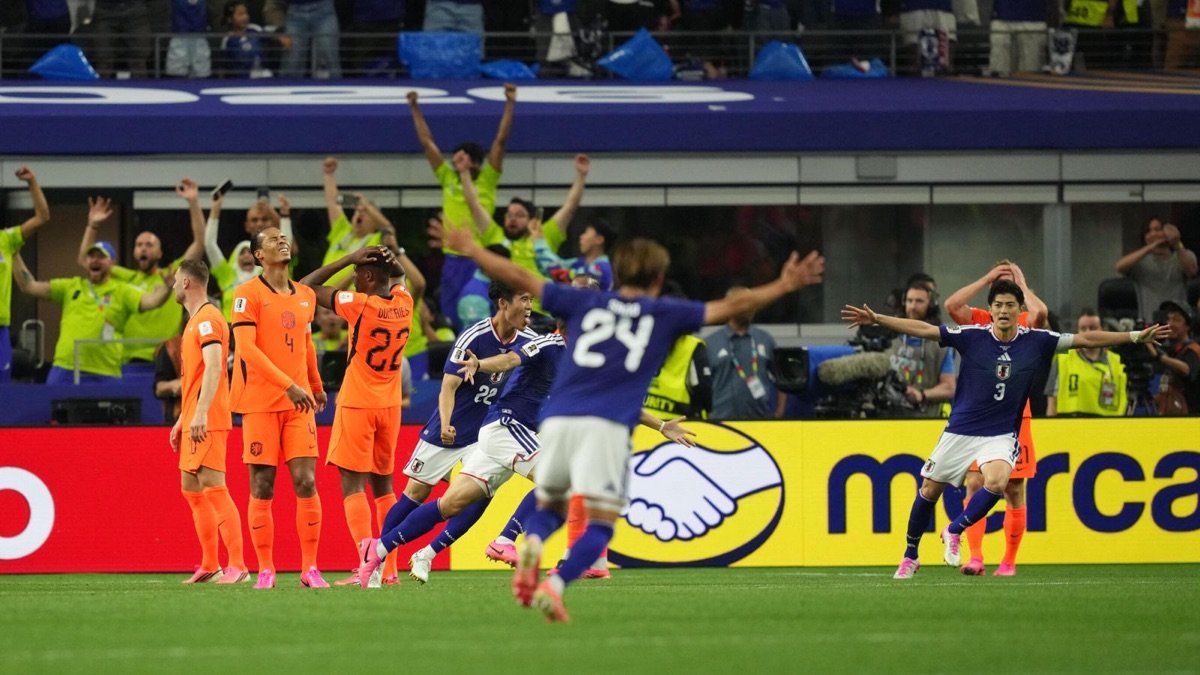
But Japan refused to go away. Daichi Kamada scored late to rescue a point for the Samurai Blue, turning what looked like a Dutch victory into one of the most dramatic draws of the early group stage.
For the Netherlands, this was a warning. For Japan, it was another sign that they are no longer just a dangerous underdog. They are a mature tournament team that knows how to survive difficult moments.
A slow first half before the match explodes
The first half was controlled but cautious. The Netherlands had more of the ball and tried to build patiently, using their midfield to control the rhythm.
Cody Gakpo, Donyell Malen and Crysencio Summerville looked for spaces around Japan’s defensive block, while Denzel Dumfries offered his usual threat from wide areas.
Japan stayed compact and disciplined. They did not press recklessly or open too much space between the lines. Instead, they waited for moments to break through Takefusa Kubo, Keito Nakamura and their wide players.
There were chances, but no breakthrough before half-time. That changed completely after the break.
Van Dijk gives the Netherlands the lead
The Netherlands finally found the opening goal through Virgil van Dijk. The Dutch captain rose inside the box and guided a header into the net, giving his team the lead and giving the match the spark it needed.
It was a classic Van Dijk moment: strong movement, excellent timing and a calm finish from a set-piece situation.
In matches where open-play chances are difficult, players like Van Dijk can become decisive. At that moment, the Netherlands looked ready to take control.
They had the lead, they had the experience, and Japan suddenly needed to take more risks.
Japan respond through Nakamura
Japan’s response was immediate and impressive. Instead of losing structure after falling behind, they increased their tempo.
Kubo became more involved, Japan moved the ball quicker in wide areas, and Nakamura found the space to punish the Dutch defence.
The equaliser came when Japan attacked with speed and composure. Nakamura received the ball in a dangerous area and found the finish, helped by a deflection that left the goalkeeper with little chance.
For Japan, the goal was not only about the shot. It was about mentality. They had gone behind against one of Europe’s strongest teams, but they did not panic.
Summerville restores the Dutch lead in style
The Netherlands answered Japan’s equaliser with one of the best finishes of the match.
Crysencio Summerville received the ball on the left, moved inside onto his right angle and struck a beautiful shot into the far corner. It was the type of goal that showed confidence, balance and individual quality.
For the Netherlands, it was the perfect response. After losing the lead, they could have become nervous. Instead, Summerville’s goal gave them control again and restored the feeling that they had enough attacking quality to win the match.
It was also a major personal moment for Summerville, who showed exactly why he can be such a dangerous option in this Dutch attack.
Kamada’s late equaliser shows Japan’s mentality
Japan’s second equaliser came late, and it showed the biggest strength of this team: they keep going.
With the Netherlands trying to protect their lead, Japan continued to push forward. A corner caused problems inside the Dutch box, and Daichi Kamada was in the right place to turn the chance into a dramatic 2-2 equaliser.
It was not the cleanest goal of the match, but it was one of the most important. Japan’s players celebrated with real emotion because they knew what the moment meant.
A draw against the Netherlands in a World Cup opener is a valuable result, especially after twice falling behind. This is what makes Japan dangerous in tournament football.
Why the Netherlands will be frustrated
The Netherlands will feel they should have won. They led twice, had experienced players on the pitch and had enough quality to manage the game after going 2-1 ahead.
But they did not close the match. That is the biggest frustration for Ronald Koeman’s side.
The issue was not only conceding late. It was failing to control the rhythm after taking the lead. Japan were allowed to stay close, and once a match remains open, one set piece or one deflection can change everything.
At World Cup level, game management matters as much as talent. The Netherlands showed quality in attack, but they did not show enough control when it mattered most.
Japan deserve respect, not surprise
Japan’s draw should not be treated as a random shock. This team has built a strong tournament identity over recent years.
They are disciplined without the ball, technically sharp in transition and mentally strong when matches become difficult.
Against the Netherlands, those qualities were clear. They did not have to control possession to influence the match. They defended in structure, attacked at the right moments and responded both times after falling behind.
Japan are no longer just a team that can trouble bigger nations on a good day. They are a team capable of competing with them across 90 minutes.
What this result means for Group F
The 2-2 draw keeps Group F wide open. For the Netherlands, the result is disappointing because they had the lead twice and could not take all three points.
They still have enough quality to progress, but they now have less margin for error. For Japan, the draw is a strong platform.
It gives them belief, a valuable point and proof that they can handle pressure against elite opposition.
Both teams will feel they can improve. The Netherlands need better game management. Japan need to start faster and avoid giving opponents the first goal. But after one match, the message is clear: Group F will not be simple for anyone.
Final thoughts
Netherlands 2-2 Japan was a match that changed completely after half-time.
The Netherlands had the lead twice through Van Dijk and Summerville, but Japan responded twice through Nakamura and Kamada. The Dutch had the quality to go ahead. Japan had the mentality to come back.
That is why this result feels important. For the Netherlands, it was a missed opportunity. For Japan, it was a statement of resilience.
The final score was 2-2, but the bigger story was simple: the Netherlands could not finish the match, and Japan refused to let it die.
Netherlands vs Japan 2026 FAQ
What was the final score of Netherlands vs Japan in the 2026 World Cup?
The final score was Netherlands 2-2 Japan in their 2026 FIFA World Cup Group F match.
Who scored for the Netherlands against Japan?
Virgil van Dijk and Crysencio Summerville scored for the Netherlands.
Who scored for Japan against the Netherlands?
Keito Nakamura and Daichi Kamada scored for Japan.
Who scored Japan’s late equaliser?
Daichi Kamada scored Japan’s late equaliser to make it 2-2.
Where was Netherlands vs Japan played?
The match was played at Dallas Stadium in Arlington, Texas.
What group are Netherlands and Japan in?
Netherlands and Japan are in Group F of the 2026 FIFA World Cup.
Why were the Netherlands frustrated after the draw?
The Netherlands were frustrated because they took the lead twice but failed to protect their advantage.
Did Japan deserve the draw against the Netherlands?
Yes. Japan showed strong mentality, responded twice after falling behind and created enough pressure late in the match to earn the draw.
What does this result mean for Group F?
The result keeps Group F open, with both the Netherlands and Japan taking one point from their opening match.
This football news page is written for match context and SEO coverage. It is not betting advice, an odds preview or a recommendation to gamble.